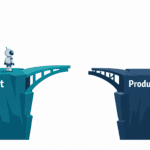




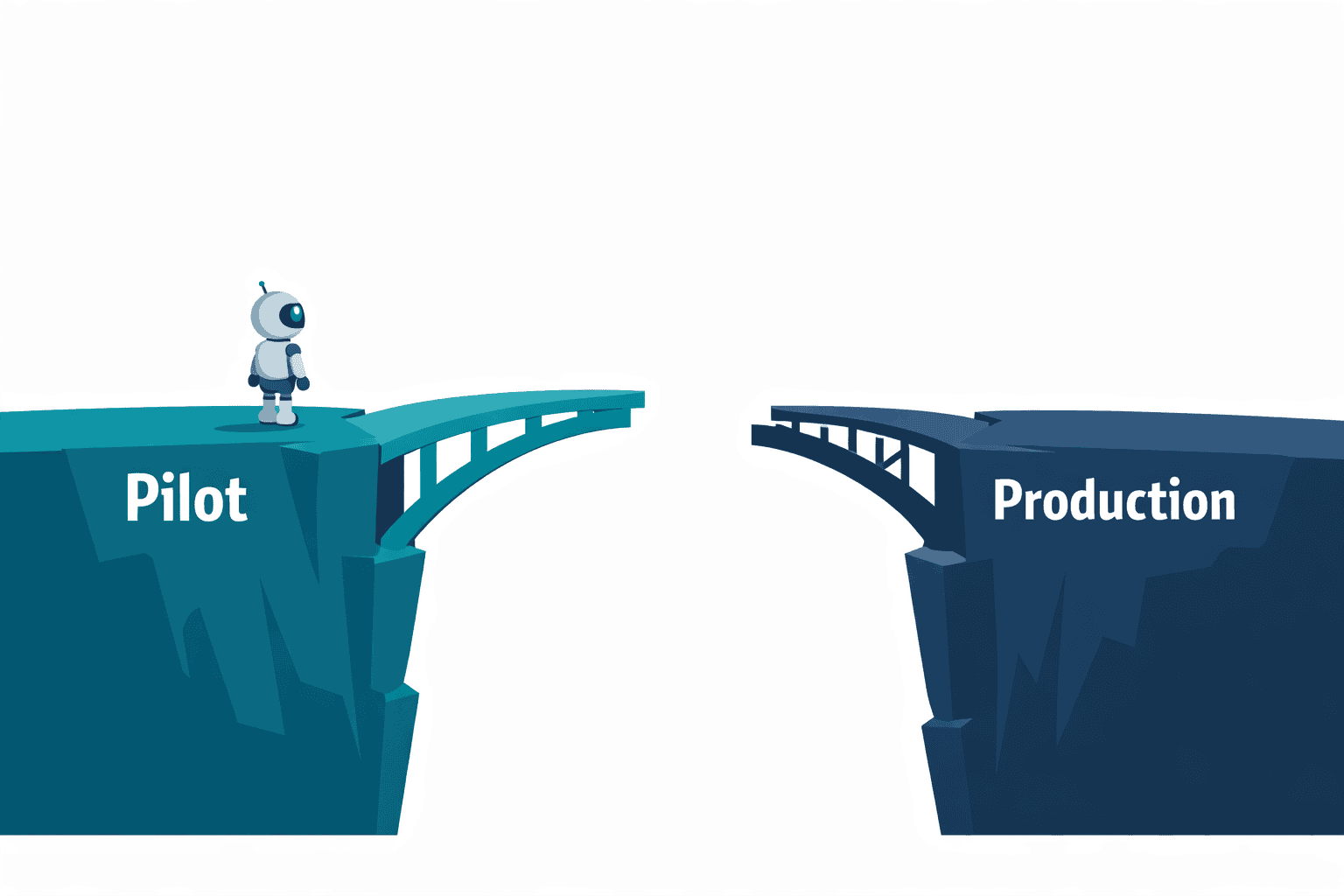
Building an AI demo is easy.
Building an enterprise-ready Agentic AI production deployment is where most companies fail.
Contents
What is Agentic AI?
Unlike traditional chatbots that simply answer questions, Agentic AI can reason, plan, make decisions, call APIs, interact with business software, execute workflows, and complete multi-step tasks autonomously.
This is why enterprises are investing heavily in AI agents for:
- Customer support automation
- Sales assistants
- Workflow automation
- Finance operations
- HR onboarding
- Healthcare administration
- Software engineering assistants
- Internal knowledge systems
The promise is enormous.
The production success rate isn’t.
Why Most AI Agent Projects Never Reach Production
The biggest misconception is that AI model quality determines success.
It rarely does.
Production deployments fail because of engineering, governance, security, and operational maturity—not because GPT, Claude, Gemini, or open-source models aren’t smart enough.
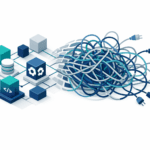
❌ No Permission Model
Agents receive unrestricted access to CRMs, ERPs, databases, or payment systems without least-privilege controls.
❌ Zero Observability
Nobody knows what the agent did, why it made decisions, or where failures occurred.
❌ Poor Error Handling
Unexpected API responses or missing data cause workflows to fail silently.
❌ Missing Governance
Security, legal, and compliance teams cannot approve deployments because there are no guardrails.
Reality Check
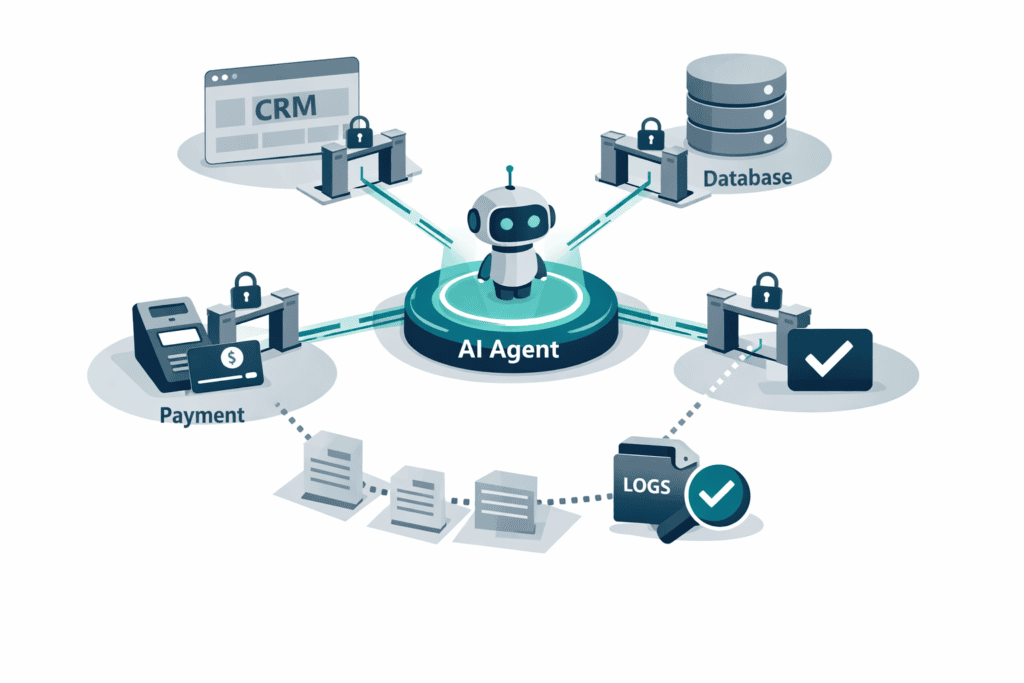
A successful demo isn’t proof that your AI agent is production ready.
Running unattended against customer data is an entirely different engineering challenge.
What Production-Ready Agentic AI Really Looks Like
| Pilot | Production |
|---|---|
| Works in one demo | Runs 24/7 reliably |
| Manual supervision | Autonomous with approvals |
| Basic prompts | Structured workflows |
| No monitoring | Complete audit logs |
| Unlimited permissions | Least-privilege access |
| No recovery strategy | Fallback workflows |
Four Principles Behind Successful Agentic AI Production Deployment
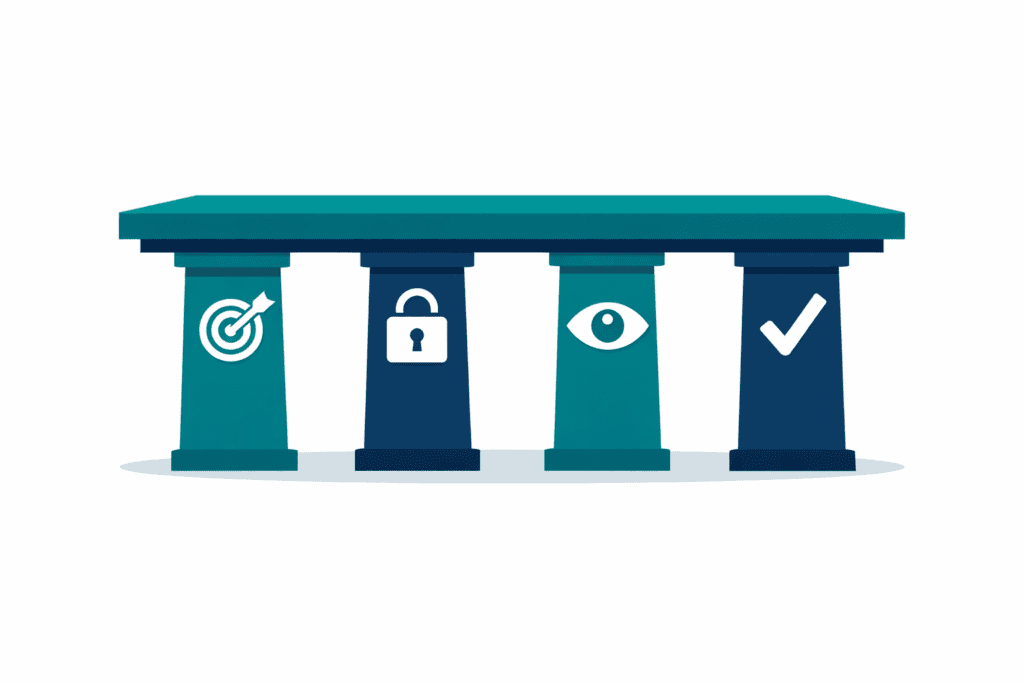
1. Solve One Workflow
Avoid trying to automate an entire company.
Instead, automate one measurable business process exceptionally well.
2. Give Agents Boundaries
Use role-based permissions, approval workflows, and human checkpoints before executing high-risk actions.
3. Log Everything
Every prompt, API call, decision, and action should be observable and reviewable.
4. Measure Business Impact
Track cost savings, response time, productivity, accuracy, and customer satisfaction.
Best Practice:
Successful AI deployments are measured by business outcomes—not by how impressive the demo looks.
Production Deployment Checklist
- ✅ Identity & Access Management
- ✅ Role-Based Permissions
- ✅ API Gateway
- ✅ Audit Logging
- ✅ Monitoring Dashboard
- ✅ Human Approval Workflow
- ✅ Error Recovery Strategy
- ✅ Rate Limiting
- ✅ Security Testing
- ✅ Integration Testing
- ✅ Rollback Strategy
- ✅ Compliance Review
Frequently Asked Questions
What is Agentic AI?
Agentic AI refers to AI systems capable of planning, making decisions, using external tools, and completing multi-step tasks with limited human intervention.
Why do AI agent projects fail?
Most failures stem from missing governance, weak security, poor observability, inadequate testing, and insufficient engineering discipline—not the AI model itself.
How long does it take to move from prototype to production?
For a well-scoped workflow, many teams can reach a production-ready deployment in 6–12 weeks, depending on integrations, security requirements, testing, and organizational approvals.
Can small startups use Agentic AI?
Absolutely. Start with one repetitive workflow that delivers measurable value, validate it with users, and expand only after proving ROI.
Ready to Move Your AI Agent Beyond the Demo?
If your AI agent performs well in demonstrations but you’re hesitant to connect it to real business systems, that’s a sensible concern—and one that can be addressed with the right engineering practices.
בְּ SynergyLabs.io, we help founders and engineering teams transform promising AI prototypes into secure, observable, and production-ready systems with robust permissions, guardrails, monitoring, and governance.