




 The AI Shift in Software Teams
 The AI Shift in Software Teams
In 2025, Artificial Intelligence is no longer just an add-on — it’s a co-worker.
From writing cleaner code to automating sprints, AI tools have entered every layer of software development. Teams that once relied on manual reviews and repetitive coding now use AI to generate, test, and optimize software at unprecedented speed.
According to GitHub’s 2025 developer trends report, over 68% of developers use AI-assisted tools daily. The real question isn’t if AI will change your team — it’s how fast you adapt.
How AI is Transforming Developer Roles
 How AI is Transforming Developer Roles
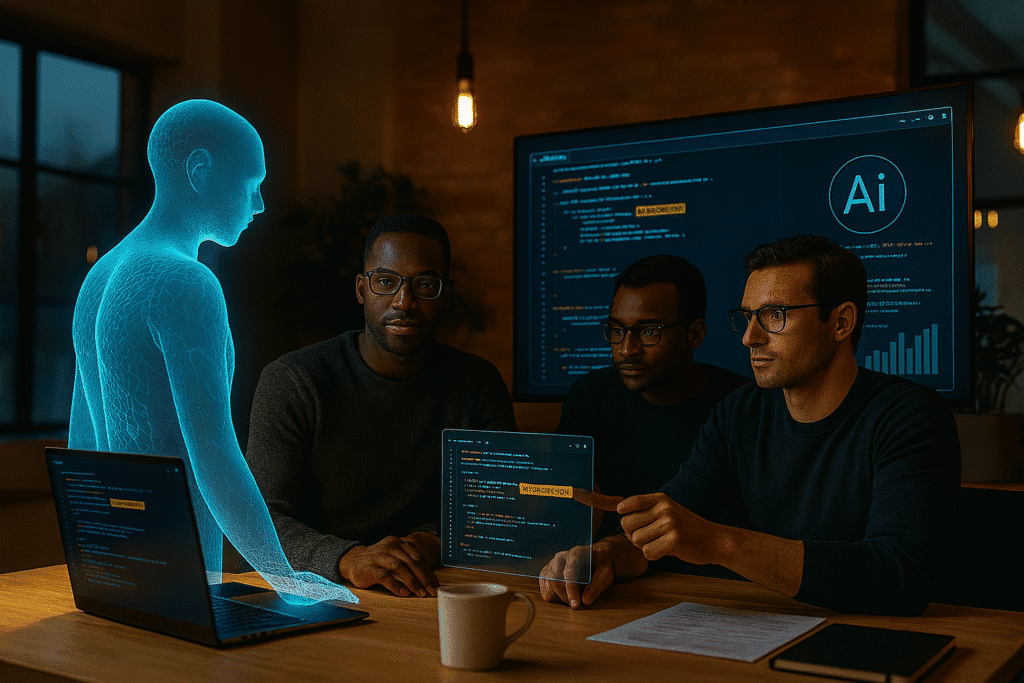
Developers are evolving from code writers to AI orchestrators.
Instead of writing every line, developers now design logic, train prompts, and validate outputs.
Examples:
 Examples:
Frontend Developers: Use AI to generate UI components and test accessibility.
Backend Developers: Employ AI for schema design, optimization, and documentation.
Full Stack Developers: Leverage AI copilots (like GitHub Copilot or Cody) for end-to-end scaffolding.
Human creativity + AI speed = Supercharged productivity.
QA & Testing: From Manual to Predictive
 QA & Testing: From Manual to Predictive
AI-powered QA systems now predict bugs before deployment.
Machine learning models trained on historical data identify likely failure points, while NLP-based tools write and execute automated tests.
Impact:
 Impact:
Fewer regression issues
Faster release cycles
Continuous improvement feedback loops
For example, tools like Testim and Mabl are redefining test automation by learning from previous runs and adapting scripts dynamically.
Project Managers and AI Collaboration
 Project Managers and AI Collaboration
AI is also reshaping project management and Agile workflows.
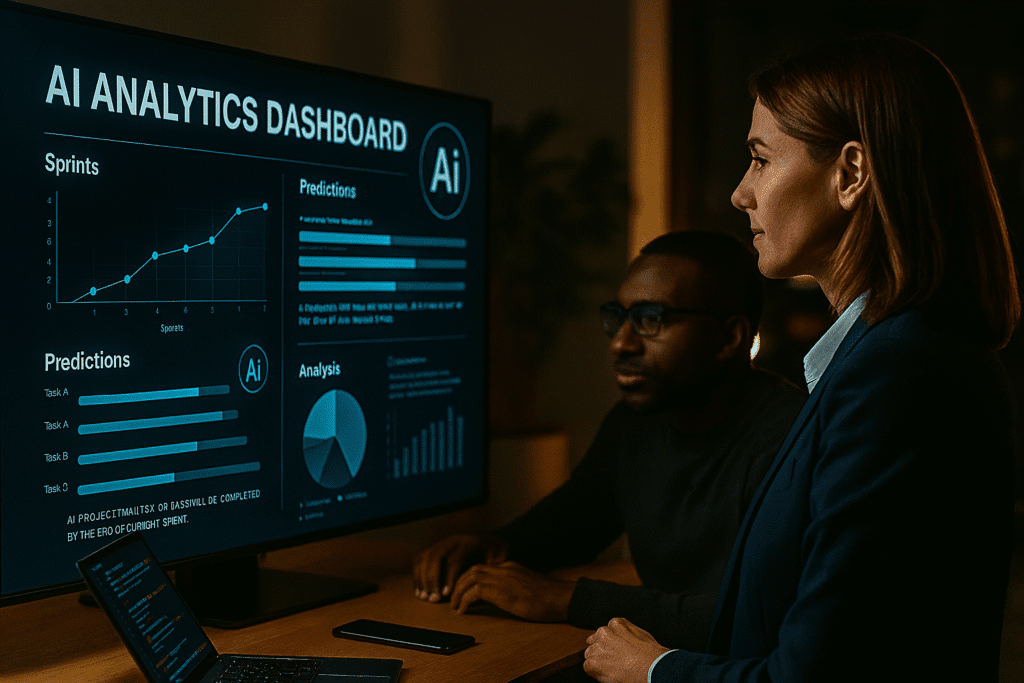
Instead of manually tracking tasks, tools now provide real-time status predictions, risk alerts, and sprint planning suggestions.
AI Use Cases:
 AI Use Cases:
Jira AI Assistant for automated backlog refinement
Linear’s predictive task completion models
Trello’s AI summaries for progress updates
This means project managers focus less on tracking and more on strategy and human alignment.
Challenges: Skills, Trust, and Accountability
 Challenges: Skills, Trust, and Accountability
While AI boosts efficiency, it introduces new challenges:
Skill gap: Developers must learn prompt engineering and data awareness.
Code trust: AI may produce insecure or biased code without human review.
Ethics: Ownership and accountability for AI-generated code remain grey areas.
Companies must create AI governance guidelines and upskilling programs to maintain reliability and compliance.
The Future: Human + AI Synergy
 The Future: Human + AI Synergy
The future of software teams isn’t about replacement — it’s about augmentation.
AI takes over repetitive tasks, freeing humans to focus on creativity, logic, and innovation.
By 2030, the most successful software teams will be those that: Integrate AI across the lifecycle Embrace hybrid human-AI collaboration Constantly evolve skills and processes
Want to integrate AI into your software development workflow or scale your team with AI-empowered developers? Let’s talk — your next-gen software team starts today.